
A Hybrid Chilled Water & VRF system is an integrated cooling solution that combines:
- Chilled Water System (central plant, chiller + pumps + AHUs/FCUs) → handles base load and large cooling demands.
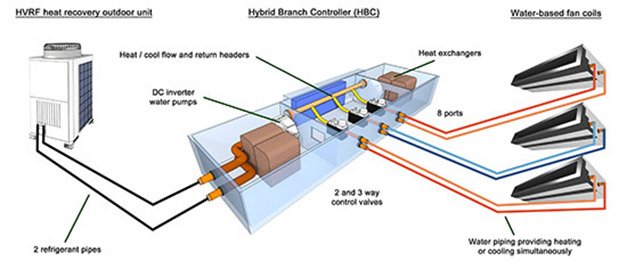
- VRF (Variable Refrigerant Flow) System → handles localized/part loads and zones needing flexible temperature control.
👉 Think of it as the “best of both worlds”:
- Chillers for bulk cooling.
- VRF for precise zoning & energy optimization.
🔹 How It Works
- Central Chiller Plant
- Produces chilled water (6–7 °C supply, ~12–13 °C return).
- Pumps circulate chilled water to large AHUs or secondary FCUs.
- Covers high, stable loads like lobbies, open offices, conference halls.
- VRF System
- Outdoor units with inverter-driven compressors.
- Refrigerant lines run to VRF indoor units in small offices, meeting rooms, apartments, or retail shops.
- Ideal for areas with variable occupancy.
- Control Integration
- Both systems connect to a BMS (Building Management System).
- BMS decides load sharing between chillers & VRF to minimize energy use.
🔹 Advantages of Hybrid Chilled Water + VRF
✅ Flexibility
- Chilled water covers large constant loads.
- VRF serves zones with fluctuating occupancy (on/off).
✅ Energy Efficiency
- Chillers run closer to full load → high efficiency.
- VRF optimizes part-load conditions.
✅ Zoning & Comfort
- VRF provides independent temperature control for each zone.
- Better IAQ and humidity control with chilled water AHUs.
✅ Redundancy & Reliability
- If one system is down, the other provides partial coverage.
✅ Space Optimization
- VRF reduces need for large chilled water piping in certain zones.
- Smaller plant room than an all-chilled water solution.
✅ Future Proofing
- Lower refrigerant volume than a full VRF project (better for new F-Gas/low-GWP rules).
🔹 Applications
- Mixed-use high-rise towers → Chilled water for offices/hotels, VRF for apartments.
- Hospitals & Healthcare → Chilled water for major areas, VRF for doctors’ rooms, admin zones.
- Universities & Schools → Chilled water for lecture halls, VRF for small labs and offices.
- Shopping malls → Central plant for anchor tenants, VRF for small retail shops.
🔹 Comparison: Full Chilled Water vs Full VRF vs Hybrid
| Feature | Full Chilled Water | Full VRF | Hybrid (Chilled Water + VRF) |
|---|---|---|---|
| Refrigerant Use | Minimal | High | Medium (limited VRF) |
| Energy Efficiency | High at base load | High at part load | Very high (optimized mix) |
| Zone Flexibility | Limited | Excellent | Excellent |
| Initial Cost | High (plant, piping) | Medium | Medium-High |
| O&M Complexity | Water treatment, pumps | Specialized VRF service | Shared, balanced |
| Best Use | Large buildings with stable load | Small to medium buildings, flexible spaces | Large mixed-use or high-rise with diverse loads |
🔹 Real-World Example
👉 In a 40-story mixed-use tower:
- Chilled water system → serves the hotel ballrooms, lobby, and open office floors.
- VRF system → serves apartments, small retail shops, and individual meeting rooms.
- Both tied into a BMS for load management → resulting in 20–30% energy savings compared to using either system alone.
✅ In short:
A Hybrid Chilled Water & VRF system merges the efficiency and IAQ strength of central chilled water plants with the zoning flexibility of VRF systems—making it ideal for mega projects, high-rise mixed-use buildings, and hospitals.