
HVAC systems maintain indoor comfort by controlling temperature, humidity, and air quality. These systems are widely used in homes, offices, hospitals, factories, and commercial buildings.
1.1 Working Principle
HVAC systems work by:
- Heating – Uses fuel (gas, electricity, or oil) or heat pumps to warm air or water.
- Cooling – Removes heat from the air using refrigerants and transfers it outside.
- Ventilation – Ensures fresh air circulation and removes contaminants.
1.2 Main Components of HVAC
- Thermostat – Regulates temperature by turning systems on/off.
- Furnace/Boiler – Generates heat using gas, oil, or electricity.
- Heat Exchanger – Transfers heat from the furnace to the air.
- Air Conditioner (Compressor, Condenser, and Evaporator) – Absorbs and releases heat.
- Ductwork & Vents – Distributes conditioned air.
- Filters & Humidifiers – Improve air quality and maintain humidity levels.
1.3 Types of HVAC Systems
- Split System – Separate heating and cooling units (e.g., furnace and air conditioner).
- Packaged System – Both heating and cooling in one unit (common for rooftops).
- Ductless Mini-Split – Individual indoor units connected to an outdoor unit (ideal for smaller spaces).
- Central HVAC System – Large-scale system using ducts to distribute air.
1.4 HVAC Applications
- Residential buildings
- Office and commercial buildings
- Hospitals (for air quality control)
- Industrial plants (for process cooling and ventilation)
2. Refrigeration System
Refrigeration systems are used to lower and maintain temperatures below ambient levels by removing heat from a specific space.
2.1 Working Principle
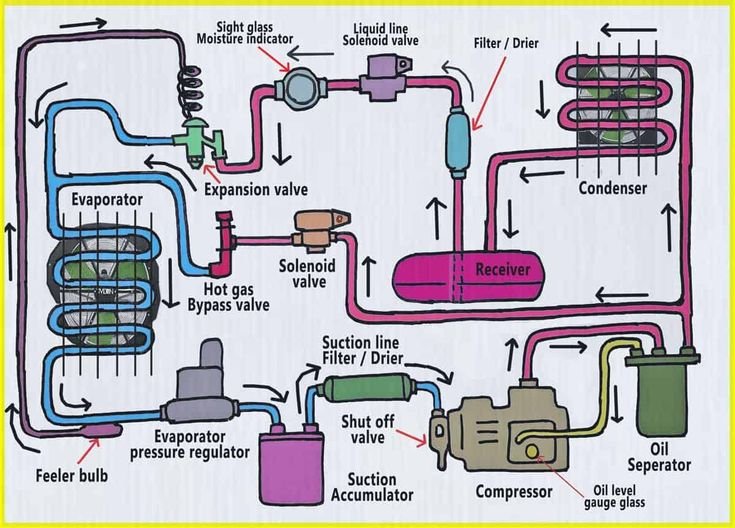
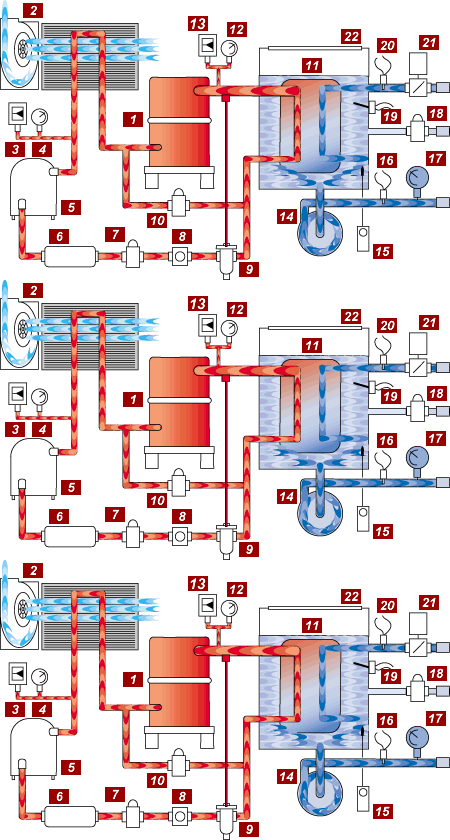
A refrigeration system works on the refrigeration cycle, consisting of:
- Compression – The compressor increases the pressure of the refrigerant.
- Condensation – The refrigerant releases heat and becomes a liquid.
- Expansion – The refrigerant expands and cools.
- Evaporation – The refrigerant absorbs heat, cooling the space.
2.2 Main Components of Refrigeration Systems
- Compressor – Increases pressure and moves refrigerant.
- Condenser Coil – Releases heat from refrigerant to the surroundings.
- Expansion Valve – Regulates refrigerant flow.
- Evaporator Coil – Absorbs heat and cools the air.
- Refrigerant – A fluid (like R-134a or R-410A) that absorbs and releases heat.
2.3 Types of Refrigeration Systems
- Mechanical Compression Refrigeration – Uses a compressor and refrigerant (e.g., air conditioners and refrigerators).
- Absorption Refrigeration – Uses heat energy instead of mechanical compressors (common in gas-powered fridges).
- Evaporative Cooling – Uses water evaporation for cooling (e.g., cooling towers).
- Cryogenic Refrigeration – Used for ultra-low temperatures (e.g., liquid nitrogen for medical storage).
2.4 Refrigeration Applications
- Food storage and preservation (cold storage warehouses, refrigerators)
- Medical and pharmaceutical industries (vaccine storage)
- Industrial cooling (chemical plants, power plants)
- Air conditioning (part of HVAC systems)
3. Key Differences Between HVAC and Refrigeration
| Feature | HVAC | Refrigeration |
|---|---|---|
| Purpose | Climate control (heating, cooling, and ventilation) | Cooling and preservation |
| Application | Homes, offices, factories, hospitals | Cold storage, food processing, medical labs |
| Heat Transfer | Transfers heat in and out of indoor spaces | Removes heat from a closed space to maintain a low temperature |
| Temperature Range | Maintains comfortable temperatures (15–25°C) | Maintains cold temperatures (-40°C to 10°C) |
4. Energy Efficiency and Maintenance
Both HVAC and Refrigeration systems require regular maintenance to ensure efficiency.
4.1 How to Improve Energy Efficiency?
- Regular Maintenance – Clean filters and coils, check refrigerant levels.
- Smart Thermostats – Optimize heating and cooling schedules.
- Insulation – Reduces energy loss.
- Upgrading Equipment – Newer systems have higher efficiency ratings (SEER for HVAC, COP for refrigeration).
4.2 Common Maintenance Issues
| Issue | HVAC Problems | Refrigeration Problems |
|---|---|---|
| Dirty Filters | Reduces airflow | Reduces cooling efficiency |
| Low Refrigerant | Weak cooling or heating | Poor refrigeration performance |
| Thermostat Issues | Incorrect temperature control | Fluctuating temperatures |
| Compressor Failure | System stops working | Loss of cooling |