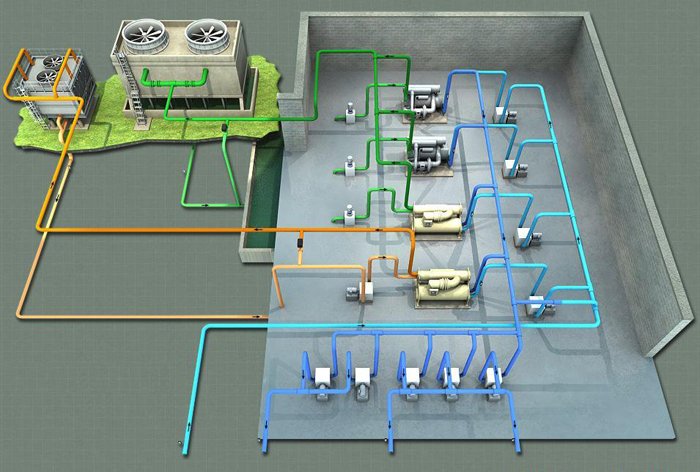


Operating Room (OR) HVAC systems are among the most specialized and critical mechanical systems in healthcare facilities. Unlike conventional comfort cooling applications, HVAC in operating theaters plays a direct role in patient safety, surgical outcomes, and infection control. The system is designed not only to provide thermal comfort but also to maintain highly controlled air cleanliness, temperature, humidity, and pressurization that comply with strict medical and regulatory standards.
Purpose of Operating Room HVAC Systems
- Infection Control:
The primary function of OR HVAC systems is to minimize the risk of surgical site infections (SSIs) by controlling airborne contaminants such as dust, bacteria, and viruses. High-efficiency filtration, typically through HEPA filters, ensures that only clean air reaches the surgical area. - Environmental Comfort:
Maintaining optimal temperature and humidity prevents patient hypothermia during surgery and ensures a comfortable working environment for surgical staff. Conditions must be adaptable to different types of surgical procedures. - Positive Pressurization:
ORs are kept at a higher pressure compared to adjacent spaces to ensure that clean air flows outward when doors are opened, thereby preventing unfiltered air from entering the sterile zone. - Air Quality & Ventilation Rates:
Fresh air ventilation dilutes contaminants and maintains oxygen-rich environments. Regulations typically require a high number of air changes per hour (ACH), ranging from 20 to 25 or more, to constantly renew air and prevent stagnation.
Key Design Parameters
- Air Changes per Hour (ACH):
Operating rooms are designed for high ACH to minimize airborne contaminant concentration. Laminar airflow systems may achieve even higher ACH for ultra-clean environments such as orthopedic or transplant surgeries. - Temperature Control:
Typical setpoints range between 18°C–24°C (64°F–75°F), depending on the procedure type. Lower temperatures are often used in orthopedic surgeries to reduce infection risks. - Humidity Control:
Relative humidity is usually maintained between 40%–60%. This prevents bacterial growth while avoiding overly dry conditions that may affect staff comfort or cause electrostatic issues. - Filtration:
A multistage filtration system is used:- Pre-filters for coarse dust.
- Fine filters for small particles.
- HEPA filters (99.97% efficiency at 0.3 microns) at terminal supply points.
- Pressure Differentials:
Operating rooms are kept at +2.5 to +5 Pa relative to adjacent spaces. Anterooms often serve as airlocks to help maintain pressure balance.
Specialized Components
- Air Distribution Systems:
- Laminar Airflow (LAF): Provides unidirectional airflow across the surgical zone, minimizing turbulence and carrying contaminants away from the surgical wound.
- Turbulent Dilution Systems: Used in general surgeries, mixing air to reduce contaminant buildup.
- Terminal HEPA Diffusers:
Positioned above the surgical table to directly supply ultra-clean air to the sterile field. - Exhaust and Return Air Systems:
Returns are typically located near the floor to capture heavier contaminants and ensure proper air circulation patterns. - Building Management System (BMS) Integration:
Continuous monitoring of air pressure, temperature, humidity, and filter status ensures compliance with hospital safety standards and allows for real-time adjustments.
Codes and Standards
Design and operation of OR HVAC systems are guided by strict international and regional codes:
- ASHRAE 170 – Ventilation of Health Care Facilities.
- FGI Guidelines – Facility Guidelines Institute standards for healthcare facilities.
- WHO Recommendations – Infection prevention and control guidelines.
- Local Health Ministry Codes – Specific to national or regional requirements.
Importance in Healthcare
The operating room is the most sensitive and controlled environment within a hospital. The HVAC system’s effectiveness directly affects patient safety, surgical outcomes, and hospital reputation. Properly designed systems reduce infection rates, enhance staff performance, and comply with accreditation standards for healthcare facilities.
In essence, an OR HVAC system is not just a mechanical service—it is a life-supporting infrastructure that safeguards patients and medical staff, ensuring that surgical procedures are conducted in the cleanest, safest, and most controlled environment possible.