
Introduction
HVAC (Heating, Ventilation, and Air Conditioning) and Refrigeration systems are essential for maintaining temperature, humidity, and air quality in residential, commercial, and industrial settings. These systems work based on thermodynamic principles, heat transfer, and fluid mechanics.
1. What is an HVAC System?
An HVAC system is designed to regulate indoor climate conditions by providing heating, cooling, and ventilation. It ensures comfort, energy efficiency, and good air quality.
A. Key Components of an HVAC System
- Heating System
- Furnace (Gas, Electric, or Oil)
- Boiler (Hot Water or Steam)
- Heat Pump (Air Source or Geothermal)
- Cooling System
- Air Conditioner (Central, Split, or Window)
- Chiller (Water-Cooled or Air-Cooled)
- Cooling Tower (For Large Commercial Applications)
- Ventilation System
- Ductwork for Air Distribution
- Fans and Blowers for Air Circulation
- Air Filters (MERV or HEPA)
- Exhaust Systems for Air Exchange
- Control Systems
- Thermostats (Manual or Smart)
- Sensors for Temperature and Humidity
- Zoning Controls for Energy Efficiency
2. Understanding the Refrigeration Cycle
Refrigeration is the process of removing heat from a space to lower its temperature. It is commonly used in air conditioning and refrigeration systems.
A. Basic Refrigeration Components
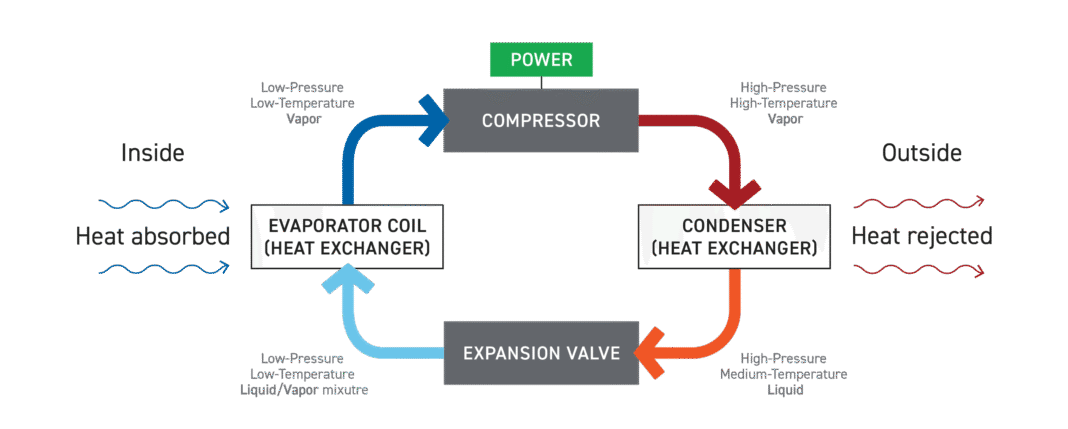
- Compressor – Pressurizes and circulates refrigerant.
- Condenser Coil – Releases heat to the environment.
- Expansion Valve – Reduces pressure to cool the refrigerant.
- Evaporator Coil – Absorbs heat from indoor air.
B. How the Refrigeration Cycle Works
- The compressor compresses the refrigerant gas, increasing its temperature and pressure.
- The hot refrigerant moves to the condenser, where it releases heat and turns into a liquid.
- The liquid refrigerant passes through the expansion valve, where pressure drops, and the refrigerant cools.
- The evaporator absorbs heat from the surrounding air, cooling the space. The refrigerant turns back into a gas and returns to the compressor, repeating the cycle.
This cycle is used in both air conditioning and refrigeration applications.
3. Types of HVAC and Refrigeration Systems
A. Residential HVAC Systems
- Split-System Air Conditioners (Indoor & Outdoor Units)
- Packaged HVAC Systems (All-in-One Units)
- Heat Pumps (Heating & Cooling in One System)
B. Commercial HVAC Systems
- Variable Refrigerant Flow (VRF) Systems (Efficient, Multi-Zone Cooling)
- Chillers (Water-Cooled or Air-Cooled)
- Cooling Towers (Heat Rejection in Large Buildings)
C. Industrial Refrigeration Systems
- Walk-in Freezers & Coolers (Food Storage)
- Cold Storage Warehouses
- Refrigerated Transport Systems (Trucks, Ships, and Rail Cars)
4. Energy Efficiency and Smart HVAC Solutions
A. Improving Energy Efficiency
- Use high-efficiency compressors and fans
- Implement zoning and smart thermostats
- Ensure proper insulation and sealing of ducts
- Use variable-speed motors (VFDs) for energy control
B. Smart HVAC Technologies
- IoT-Enabled HVAC Systems (Remote Monitoring & Automation)
- AI-Based Predictive Maintenance
- Renewable Energy Integration (Solar, Geothermal)
5. Common HVAC and Refrigeration Issues & Maintenance
A. Common Issues
- Refrigerant Leaks → Causes inefficiency and system failure
- Dirty Air Filters → Reduces airflow and efficiency
- Frozen Evaporator Coils → Blocks cooling process
- Faulty Thermostats → Leads to temperature fluctuations
B. Maintenance Best Practices
- Clean or replace air filters regularly
- Check refrigerant levels and fix leaks
- Inspect ductwork and fans for blockages
- Perform seasonal HVAC system tune-ups